
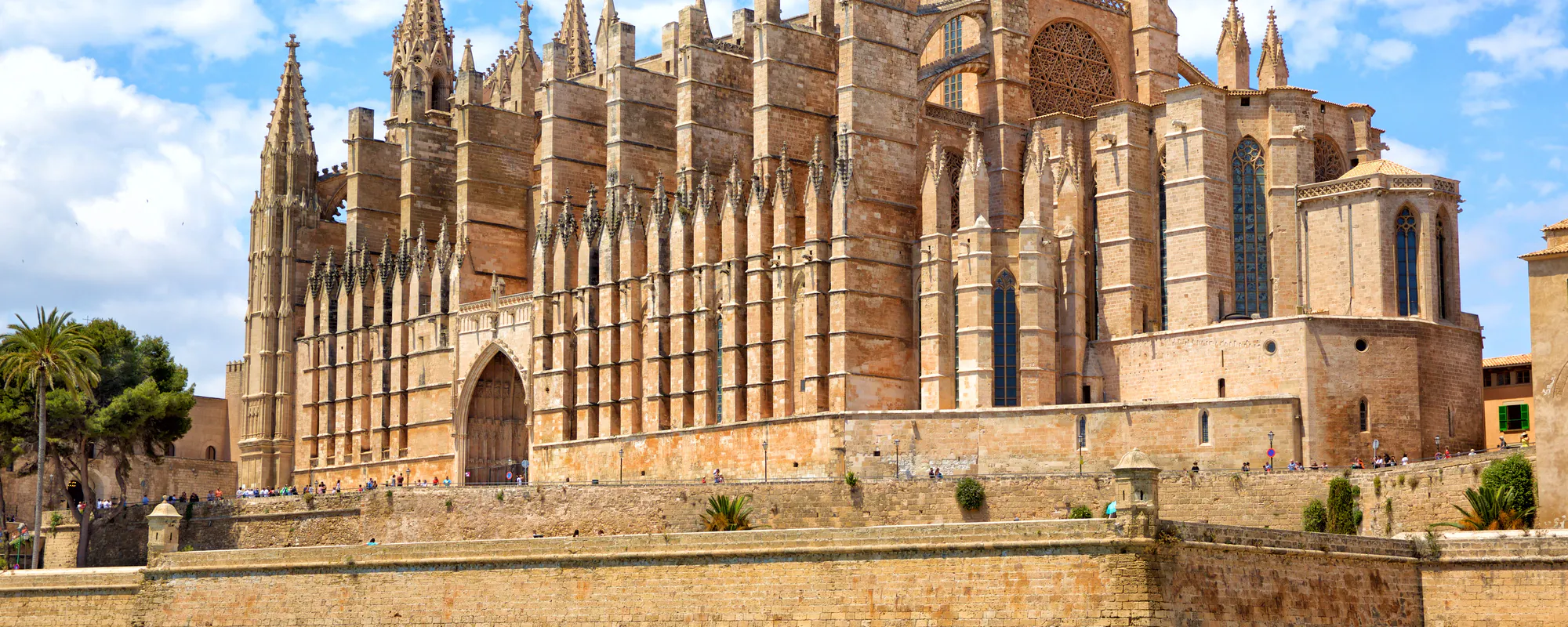
Spain - A Religious State Still?
Although a modern, non-confessional state, the Spanish government continues to subsidise the wealthy Catholic church.
Spain is officially a non-confessional (lay) state, yet the relationship between the State and the Catholic Church still feels unusually close.
Take education. State schools are lay institutions, and while they must offer Catholic religion, pupils are not obliged to take it. In practice, many families choose an alternative subject — often framed around civic and ethical themes — which can be far more reflective of modern Spain: debates about discrimination, citizens’ rights and responsibilities, and discussions sparked by current affairs.
This sits neatly beside the broader trend I’ve written about elsewhere: Spain has experienced a steep fall in Christian identification from one generation to the next. Pew’s major Western Europe survey (fieldwork April–August 2017) found that while a very large majority of Spanish adults were raised Christian, a noticeably smaller majority still described themselves that way in adulthood.
And yet, when we look at how the Church is funded through the tax system, the picture becomes more complicated.
The ‘church box’ on the tax return
Each year taxpayers can choose to tick the Church box (the casilla de la Iglesia) so that 0.7% of their income tax is allocated to the Catholic Church. Pew summarises the mechanism clearly: you can choose the Church box, the “social purposes” box, both, or neither.
The most recent provisional figures published by the Spanish Bishops’ Conference (CEE) show that for the 2024 tax year (returns were filed in spring 2025):
- 7,946,347 declarations ticked the Church box
- That’s 30.08% of declarations down considerably on the figure even five years ago
- However the allocation totalled a record figure of €429,335,080
While Spain is becoming more secular in identity and practice, the tax allocation to the Church has reached a record high.
Where does the money go?
The Church’s position is that the funds support the Church’s national and diocesan activity. Critics argue (with some justification) that a large share supports the institutional running costs of the Church — including clergy support — and that this sits awkwardly with the idea of a fully neutral state in matters of religion.
What feels difficult to defend, at least in principle, is that a lay democracy still channels a substantial slice of public tax revenue to the promotion and maintenance of one branch of one religion, rather than expecting believers to support their institutions through post-tax giving.
And the ‘X’ is not the whole picture
The tax allocation is only one strand of the Church’s footprint in public life. Spain also funds or subsidises education, welfare and healthcare provision delivered through Church-linked institutions. Some of that spending would exist anyway — Catholic schools would need to be replaced with lay institutions, hospitals would need staffing, heritage buildings still need maintaining — but the broader point remains: the Spanish state still underwrites, directly or indirectly, a uniquely historic institution in a way that looks increasingly out of step with the country’s modern self-image.
The question a lay state has to answer
Is it right that, in a lay democracy, such a significant amount of tax revenue is still diverted to one of the wealthiest and most entrenched institutions on earth — especially when essential social projects are postponed or cancelled for lack of funding?
It seems more consistent, and more equitable, that adherents of any religion should finance their institutions through direct, post-tax contributions, and that the state should not favour one faith over another — no matter how deeply embedded that faith once was in the national story.